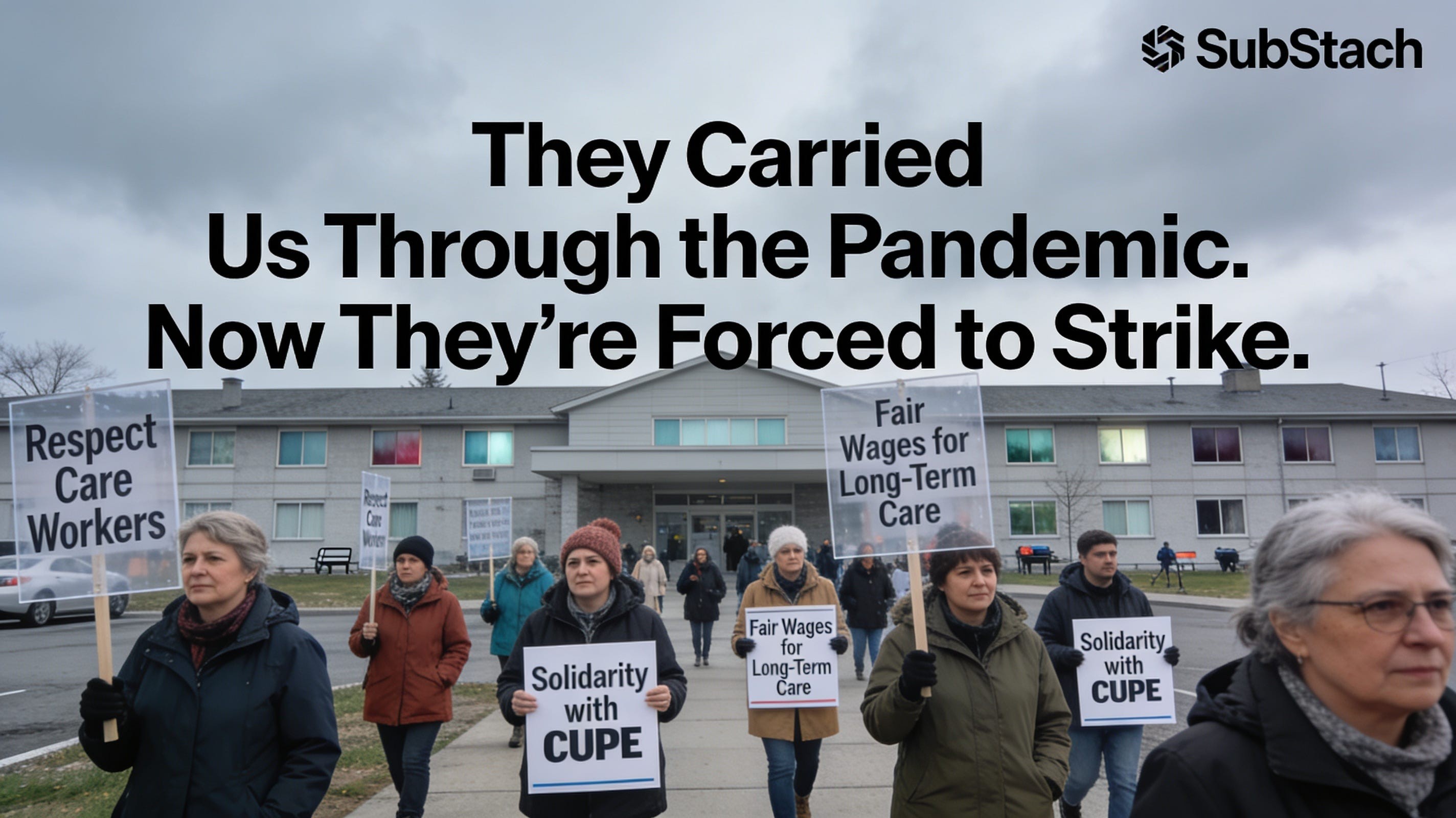
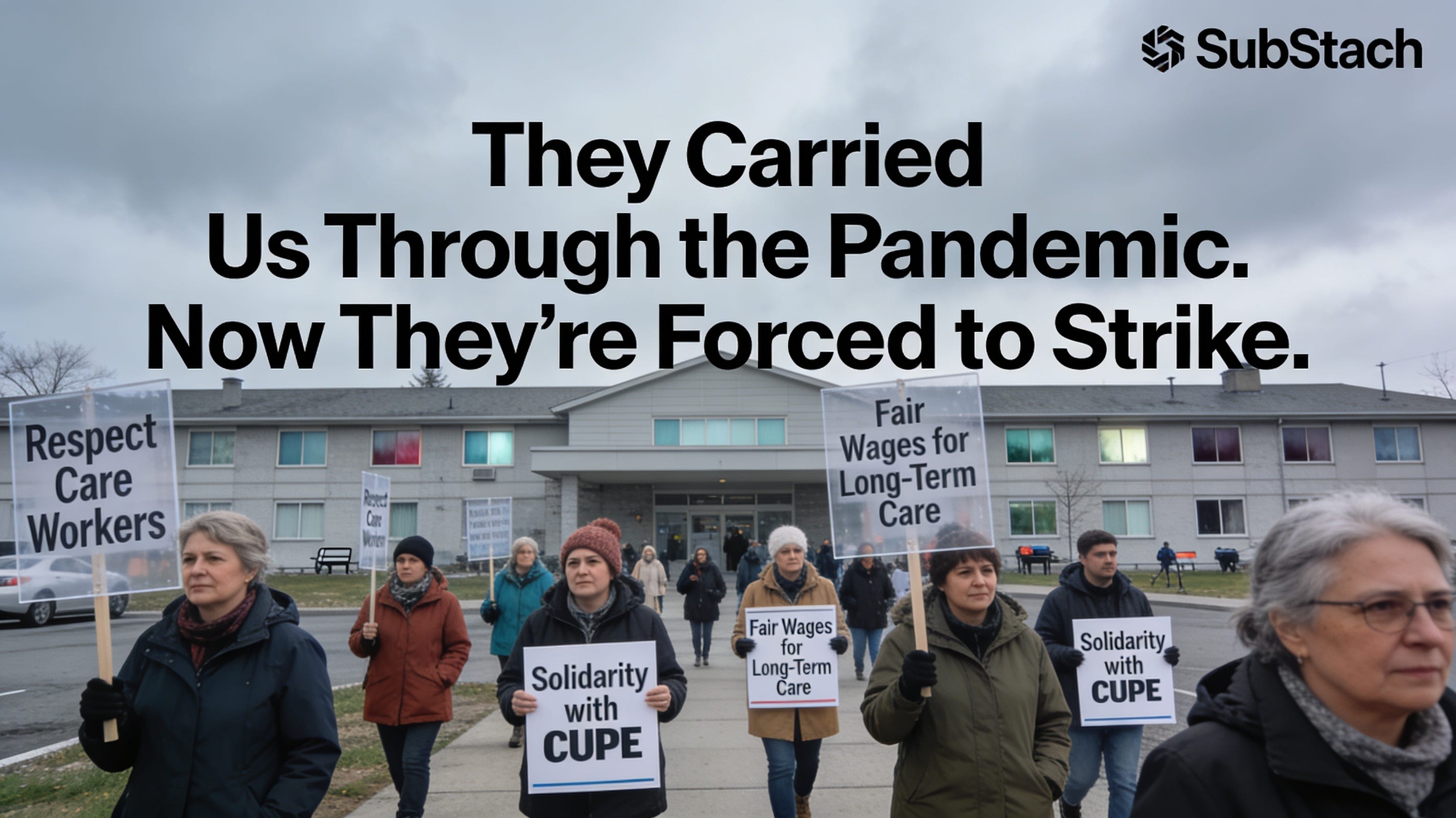
There is something deeply wrong in Nova Scotia when some 3,000 long-term care workers have to walk a picket line, warning the long-term care sector is in trouble, has been in trouble for a long time, well before the pandemic, in fact. These are the workers who care for some of the most vulnerable people in our province. They help seniors get out of bed. They lift them, feed them, wash them, comfort them, clean their rooms, answer their call bells, and stay with them through fear, pain, confusion, and loneliness. They do the work that many of us hope someone will one day do for the people we love, and maybe for us, too.
This is not extra work. This is not background work. This is the work. And still, these workers are being pushed to the point where a strike becomes the only way left to say: enough. That should shame this province. Below are links to two reports on Long-Term Care in Nova Scotia.
We all saw what happened during the pandemic. We saw how badly long-term care was exposed. We saw the fear in these homes. We saw families cut off from loved ones. We saw seniors suffer in isolation. Through all of that, these workers kept showing up. Day after day. Shift after shift. In a time of sickness, stress, and real danger, they walked into those buildings and kept caring for people who needed them.
That took courage. That took heart. That took a kind of devotion that cannot be faked.
And what did they get for it? Better still, what did the province do to correct it and improve the system?
They got praise. They got thank yous. They got nice speeches and polished statements from politicians. They got the usual promises that things would change, that lessons had been learned, that workers would be valued at last. But here we are with things that didn’t get any better, just a bunch of sound bites.
The system is still strained. Workers are still burned out. Too many are still underpaid for the physically hard and emotionally draining work they do every day. Too many long-term care homes are still stretched thin. Too many workers are still carrying more than any one person should have to carry.
At some point, we have to stop pretending this is normal. It matters to us all, and these workers are now standing up and keeping in mind that it’s not all about money.
A care system cannot run on exhaustion forever. It cannot run on guilt. It cannot run on the loyalty of workers who keep staying, not because they are treated well, but because they care too much to walk away from the people depending on them.
That kind of love for the work has been used against them for years.
And that may be one of the hardest truths in this whole story. Long-term care workers are counted on to keep going no matter what. To fill in the gaps. To do more with less. To hold together a system that governments have neglected for far too long. Their compassion becomes part of the business model. Their sacrifice becomes expected. Their silence becomes convenient.
Until one day, the silence breaks. That is what this strike is. It is not a failure on the part of the workers. It is the result of failure by the people with the power to fix this before it got here.
We should all be worried. Not only because workers deserve better, though they absolutely do. We should be worried because long-term care is not a side issue. It is not something that matters only to seniors or only to families dealing with it right now. This is about all of us. If we are lucky enough to live long lives, many of us will need care. If not us, then someone we love.
So the question is simple. What kind of care system will be there when that day comes? Will it be one where workers are respected, paid fairly, and given the support they need to provide real, human care?
Or will it be one held together by burnout, staffing shortages, and political talking points? Because that is where Nova Scotia is heading if this keeps up.
You cannot build dignified care on disrespect. You cannot ask workers to pour themselves into this job while denying them the wages and working conditions they need to live decent lives themselves. You cannot keep thanking them for their service while treating them as costs to be contained, as Mrs. Adams seems to be doing.
These workers cared for our elders through one of the darkest and hardest chapters in recent memory. They showed up when it mattered most. They carried grief, fear, risk, and responsibility that many people will never fully understand.
The problem is a province that has grown far too comfortable asking care workers to give everything and settle for less. The nearly CUPE workers now on strike are standing up for themselves, yes. But they are also standing up for every senior in care now, and every person who may need that care in the future. They are fighting for a system that does not chew people up, workers or residents, and call that acceptable.
They should not have had to get this far.
But now that they have, they deserve more than sympathy.
They deserve solidarity.
They deserve action.
They deserve a government that finally understands that caring for the people who provide care is not optional. It is the bare minimum.
The problems in Long Term Care are not the workers; it's the governments. The workers who are withdrawing their services are standing up to correct the system that the government has been failing to do for a long time.
Check the links below to learn more about the system failures.
Click the link to subscribe to my ramblings every Tuesday and Saturday.
Here are the links to the reports “Long-Term Care in Nova Scotia: Pandemic Lessons and Persistent Failure” by Rachel K. Brickner, Rebecca Casey, and Sarah Rudrum, published by the CCPA-Nova Scotia office on April 21, 2026. The direct link is: https://www.policyalternatives.ca/news-research/long-term-care-in-nova-scotia-pandemic-lessons-and-persistent-failure/
There is also a related backgrounder with the full survey findings and methodology here: https://www.policyalternatives.ca/news-research/backgrounder-long-term-care-in-nova-scotia-pandemic-lessons-and-persistent-failure/