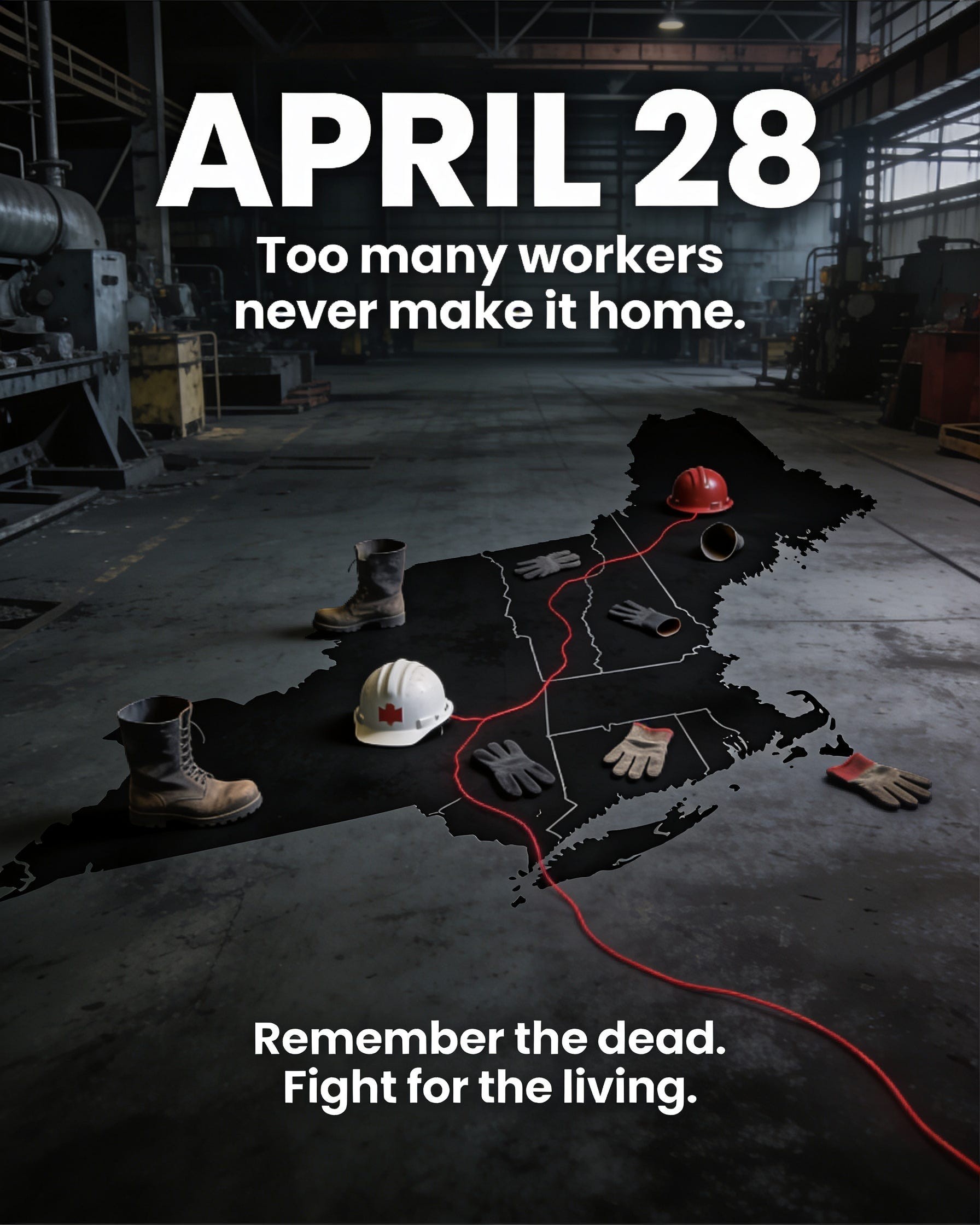
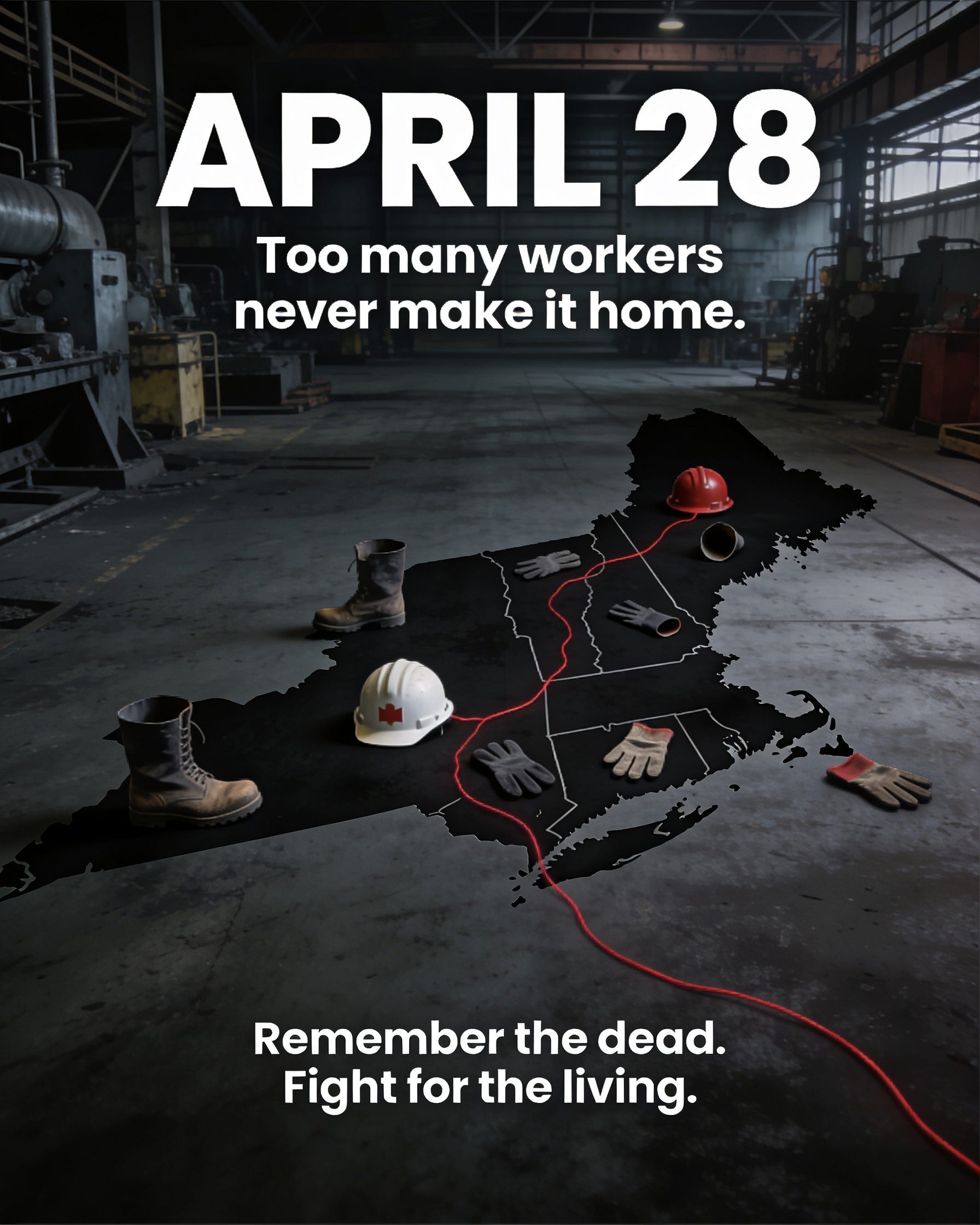
Well, here we are, it's April 28, the National Day of Mourning. It is a day to remember workers who were killed, injured, or made sick because of their work. But it should also be a day of anger, because too many of these deaths and injuries were preventable, and too many governments and employers still treat worker safety as a cost instead of a duty.
In Nova Scotia, 22 workers died at work or because of work in 2025. Over the past 25 years, about 600 workers in this province have died because of their jobs. Lives cut short, families shattered, and communities left carrying grief that never should have been theirs to bear.
That truth demands more than a moment of silence. It demands action.
For years, workers, unions, and safety advocates have warned that too many workplaces remain unsafe, understaffed, and poorly enforced. Yet the same patterns keep showing up. Injury rates remain especially troubling in provincial government workplaces and in private and non-profit long-term care homes, where workers are pushed to do physically hard, emotionally draining work under constant pressure. When the people caring for others are being hurt at these rates, that is not bad luck. That is a political failure.
Governments love to stand at podiums and praise frontline workers. They lower flags. They issue statements. They attend ceremonies. But respect means very little if workers are still being injured because workplaces are short-staffed, training is inadequate, equipment is unsafe, or employers know the rules will not be strongly enforced. No one, it seems, has an eye on how many functioning workplace OH&S committees are operating as they should. If the province is serious about protecting workers, it has to stop managing workplace safety as a communications exercise and start treating it as a matter of public responsibility.
The National Day of Mourning cannot be only about death. It must also be about injury, trauma, and the slow, daily damage done to workers. A worker does not have to die for a workplace to be dangerous. Many live with chronic pain, mental strain, and lost income because they were hurt doing the jobs that keep this province running. Sure, a lot is being done, but it has taken a long time, and if not for unions pushing for change, it likely would fall off the radar.
So today, like always, we remember the dead. But we also fight for the living. We demand safer staffing levels, stronger inspections, real enforcement, better equipment, and accountability for employers, whether public or private, who put workers at risk. No one should lose their life or their health for a paycheque.
The most honest way to honour workers is not with empty words. It is with fewer deaths, fewer injuries, and the political courage to make worker safety come before profit, neglect, and public relations.