Let’s be clear: violence is not the answer. Destroying property is wrong and dangerous. Smashing a windshield is a distraction from the real issues. According to the RCMP, no one was injured, and one man was arrested and released while the investigation continues. Bumping a car into a protester is just as wrong.
But if we only talk about a broken window, we miss the bigger story: the people in that crowd and the anger growing across this province. This rally didn’t start as a riot. It began with about 50 peaceful protesters concerned about the closure of five library branches in the Annapolis Valley. As the crowd grew, people joined in over arts cuts, Treaty rights, fracking, and more.
These aren’t outsiders. They’re neighbours, our local shoppers, workers, and taxpayers. They’re library users, artists, Mi’kmaw rights holders, and parents trying to keep food on the table. Some individuals may have crossed a line, but that doesn’t undermine everyone’s concerns. Calling the whole crowd “rioters” makes a strong soundbite, but it doesn’t explain the anger. It just adds fuel to the fire.
Harm doesn’t always appear at a rally and damage property. Sometimes it arrives in a suit, using calm words like “efficiency” and “tough choices.” A smashed windshield is easy to see. The damage from budget cuts is quieter, but just as real.
For many families, the cuts mean a senior losing their only place to use the internet, a longer drive for basic services, a community losing its history, and a seasonal worker suddenly without a paycheque or EI. Each closure is one more gathering place gone, one more piece of local history lost, one more reason for visitors to pass a town by.
People are working, but the bills are outrunning the paycheque. The middle class feels less secure, and low-income families are being pushed closer to the edge. Then the government tells them that the local arts and culture programs are being cut, that the museum will close, that the grant program that keeps your organization going is gone, that the local library branch is in jeopardy, and that public service jobs will need to go too. The Houston government’s 2026-27 budget proposes more than millions in cuts. Twelve provincial museums are slated to close, affecting dozens of jobs. The closure of five library branches has been delayed until September 3, but the core problem remains: funding has been frozen since 2020 while rent, heat, and wages keep climbing.
Child and family poverty is entrenched in this province, and Food Banks Canada gave Nova Scotia a D on its 2026 poverty report card. Roughly one in four Nova Scotians face food insecurity, and Feed Nova Scotia reports nearly 2,000 food bank visits a day. Power rates rose 3.1 percent on May 1 and are set to rise another 3.9 percent next January, a 7% increase. In Halifax, asking rent for a two-bedroom hit $2,350 in early 2026, 72 percent higher than in 2019.
Families are already stretched to the limit. Asking them to be patient while the trickle-down effect wears thin isn’t a plan; it's the same old story we've heard time and time again.
To make matters worse, the Premier’s so-called “listening tour” has held all seven stops before chambers of commerce at paid-entry events. There’s nothing wrong with meeting business owners, but they don’t speak for the whole province. Where’s the kitchen-table tour? Where are the meetings with renters, teachers, care workers, and food bank volunteers? Real listening means pulling up a chair for the people living with your decisions, not just the ones paying for tickets to get in.
This isn’t the deal voters were offered. In 2024, the PCs didn’t ask for a mandate to cut hundreds of grants, close museums, or lift bans on fracking and uranium. They still haven’t given clear answers on offshore wind, and many fear it will export our resources and profits without leaving stable jobs behind. We’ve heard these promises before. Too often the resource leave, the profit leaves, and communities are left wondering where the well-paid jobs went. Before another export deal moves ahead, people deserve clear answers on local jobs, public returns, environmental safeguards, and who actually owns the benefits.
The recent polls are a warning to government whose approval has dropped sharply, because many Nova Scotians feel like nobody’s listening.
The person who smashed that windshield is responsible for what they did. But the government is responsible for the choices it makes, the promises it breaks, and the anger it instills.
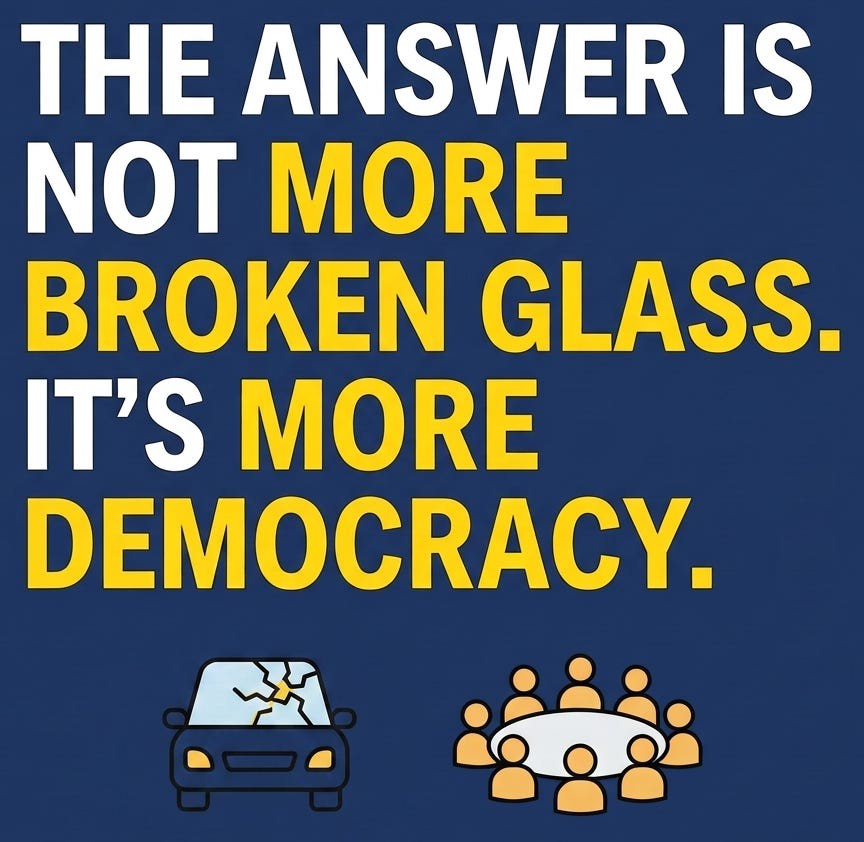
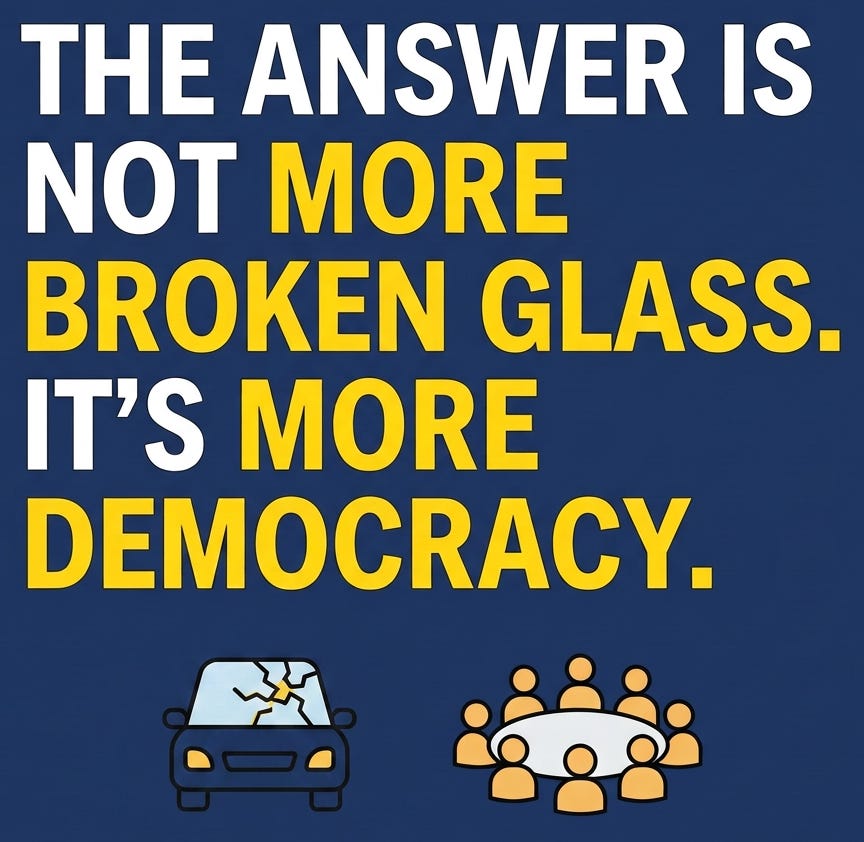
The answer is not more broken glass. It’s more democracy. Open the doors. Sit at kitchen tables and listen before the damage is done.
A windshield can be replaced.
A broken community and a broken province will be much harder to fix.
Take a minute and subscribe to my twice-weekly ramblings.
How about also sharing this and other posts?
These are my opinions written to get you thinking about what actually matters in this province. Fairness. Accountability. Who gets helped and who gets left out. Agree with me or don’t. But let’s have a respectful conversation.