Beyond the Label: Sweatshops, Corporate Lies, and the Real Cost of Cheap Clothes
That cheap shirt in the store is not cheap because of magic. It is cheap because someone, somewhere, paid the real price. Too often, that price is paid by workers trapped in dangerous factories, sewing for long hours in unsafe buildings for poverty wages. They face blocked fire exits, failing electrical systems, abuse, wage theft, and threats if they dare speak up. Some are injured. Some are killed. And all of it happens so global brands can pump out more products, faster and cheaper.
Let’s stop pretending this is an accident. It is a business model. As a health and safety activist in Nova Scotia, I know one thing for sure: no worker should have to risk their life for a paycheque. Not here. Not anywhere. A safe workplace is not a luxury for rich countries. It is a basic human right.
Canadian companies are not innocent bystanders
Canadian companies love to hide behind distance and paperwork. They say the factory is overseas. They say it is owned by a supplier. They say they care about ethics and standards. But if they choose the factory, set the price, demand impossible deadlines, and profit from the final sale, then they are part of the harm. That is the truth behind the label. Many Canadian brands and retailers use factories in countries where wages are low, and labour protections are weak or poorly enforced. They go there for one reason: cheaper labour and bigger profits. The risk is dumped onto workers while the money flows upward. So no, they do not get to wash their hands of responsibility. If your business depends on unsafe factories, then those conditions are part of your business.
Cheap fashion can kill
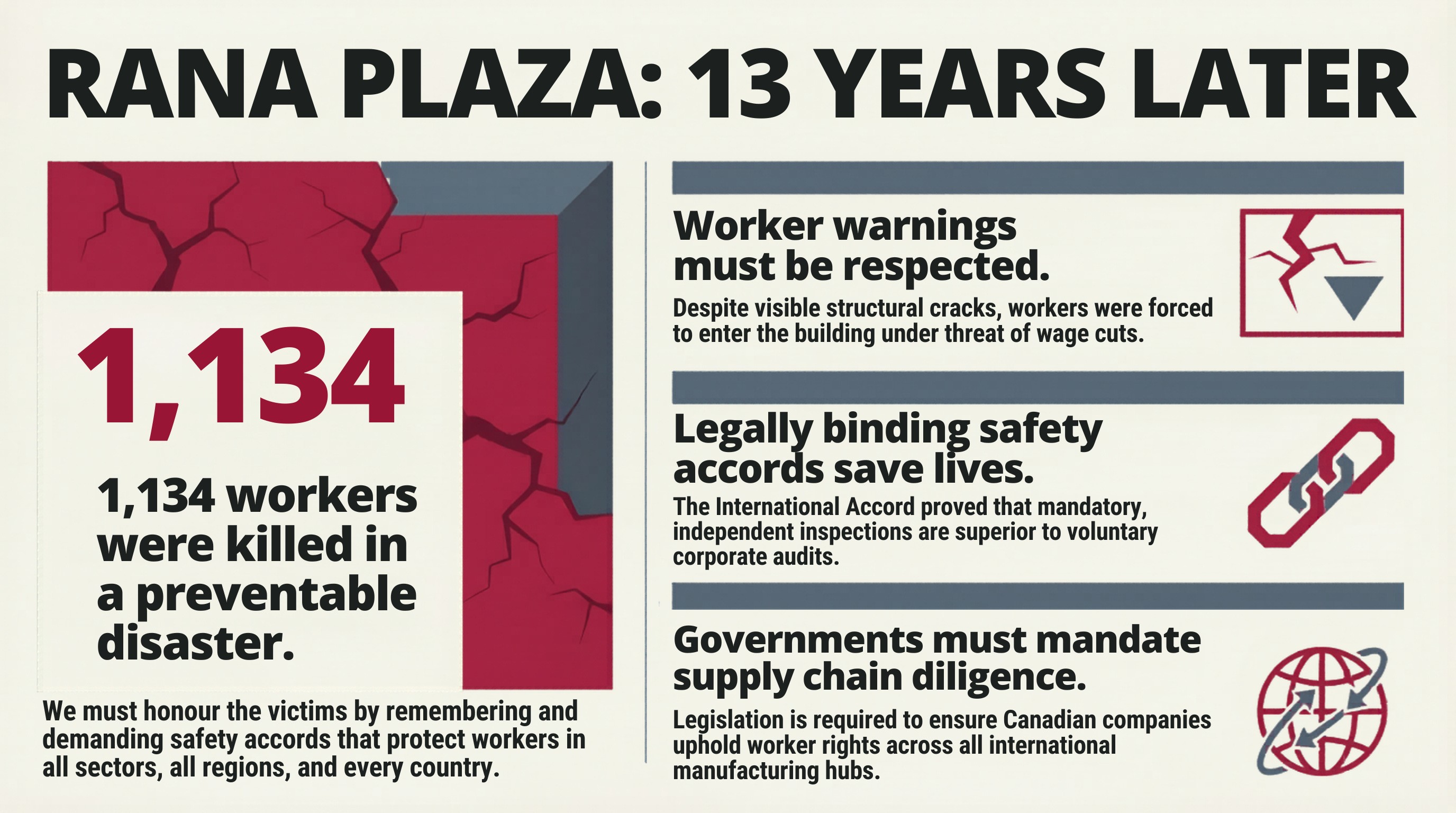
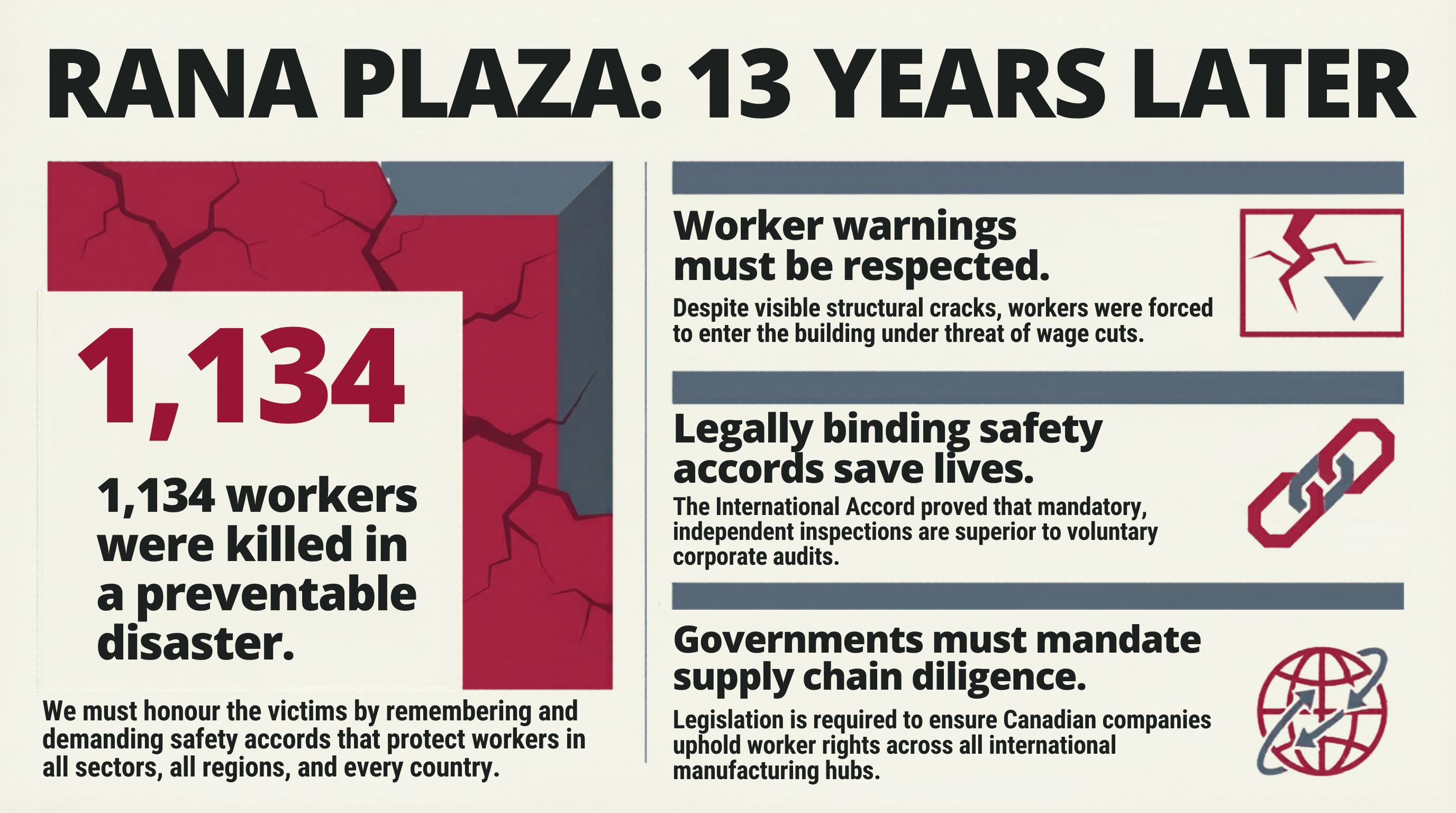
We saw the horror of this system in the Rana Plaza collapse in Bangladesh. Thousands more were hurt. Workers had already warned that the building was unsafe. Cracks were visible. They were still told to go in. Why? Because production came first. Profit came first. Human life came last. That was not just a tragedy. It was corporate negligence on a mass scale. And let’s be honest, Rana Plaza did not reveal a broken system. It revealed a system working exactly as designed. Brands pushed for low prices and fast turnaround. Factory owners cut corners. Workers were treated as disposable. That is what sweatshop economics looks like when the lies fall away.
Voluntary promises are worthless
After the Rana Plaza collapse, many companies rushed to polish their image. They rolled out glossy statements, ethical sourcing claims, and public relations spin. But nice words do not hold up a factory wall. Corporate audits do not save lives when companies are really just marking their own homework.
That is why voluntary programs are not enough. If companies are serious, they should sign binding safety agreements, accept independent inspections, make factory lists public, and give workers and unions a real say. Anything less is just damage control. In any workplace, safety only matters if workers have the power to speak, refuse unsafe work, and force employers to fix hazards. Without that, “corporate social responsibility” is often just a nicer name for corporate avoidance.
What companies should be doing
If a Canadian company profits from goods made overseas, it should be required to know exactly where those goods come from and what conditions workers face. That means checking for fire risks, unsafe buildings, locked exits, electrical hazards, wage theft, forced overtime, harassment, and union busting. It means fixing the problems, not hiding them. It means paying enough so that factories are not forced to cut every corner to survive. It also means respecting workers as human beings. Workers should have the right to organize, report hazards, refuse dangerous work, and go home alive. That should be the floor, not the ceiling. And when disaster strikes, companies should not disappear behind legal fine print. They should pay compensation, fund repairs, and face real consequences. If they profit from the labour, they own part of the responsibility.
Workers need power, not sympathy
Let’s get something straight. Workers in sweatshops do not need pity from the same corporations exploiting them. They need power. They need unions. They need enforceable rights. They need real health and safety protections. They need the strength that comes from standing together and refusing to be treated like disposable parts in someone else’s profit machine. That is true in Bangladesh. It is true in Qatar. And it is true here in Nova Scotia, too. The safest workplaces are not usually the ones with the nicest slogans. They are the ones where workers have a voice, and employers know they will be held accountable.
We should be angry
People should be angry that major brands still profit from misery. People should be angry that workers die in factories making clothes for wealthy countries. People should be angry that corporations spend more energy protecting their image than protecting human lives. And governments should stop letting them get away with it. We need stronger laws, real supply chain accountability, and consequences for companies that profit from abuse. If a company sells products in Canada, it should not be allowed to shrug off sweatshop conditions as someone else’s problem. Because it is not someone else’s problem. It is built into the price tag. The next time you pick up a bargain shirt, remember this: somebody paid for that deal with their labour, their health, and sometimes their life.
In my opinion, that is the truth beyond the label.