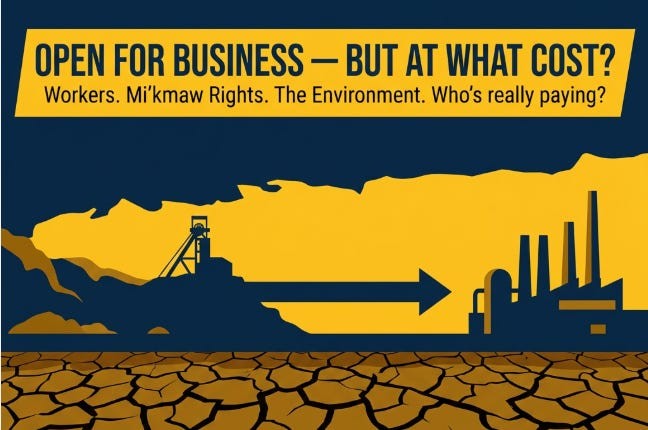
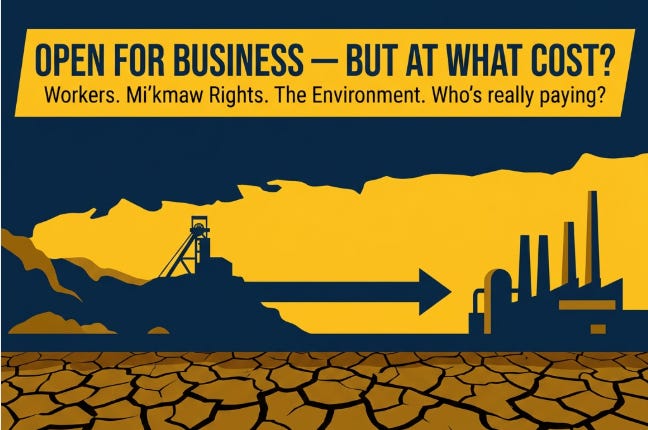
The Houston government wants you to know Nova Scotia is “open for business” when it comes to mining. Critical minerals, uranium, and lithium, you name it, it’s all on the table.
And yes, the clean energy shift is real. Those minerals do matter. But here’s what nobody in government wants to talk about. We’ve been down this road before.
Nova Scotia has at least 60 contaminated old mine sites right now. Most are gold mines from the 1800s and early 1900s. The companies that made the money are long gone. The cleanup bill falls on us. Nova Scotia taxpayers could be on the hook for close to $600 million to clean up abandoned mines.
That’s not ancient history. That’s today. And without serious changes to our laws, it’ll be tomorrow too.
There’s also a bigger question. What does “open for business” actually mean for regular Nova Scotians? Right now, the plan looks like the same old story. Dig it up. Ship it out raw. Let someone else do the manufacturing somewhere else. That’s not a strategy. That’s a giveaway.
If we’re going to let companies dig up our land, then the finished products should be made right here. Battery parts. Refined metals. Manufactured goods. That’s where the lasting jobs are. That’s what builds an economy, not just a mine. Any deal that doesn’t include processing and manufacturing in Nova Scotia is leaving most of the benefit on the table.
Then there’s the legal gap around “care and maintenance.” When a mine stops producing, a company can park it in this grey zone for as long as it wants. The mine isn’t officially open, and it isn’t officially closed. Nova Scotia law doesn’t clearly define this status. There’s no time limit. And if the company goes broke while the mine sits in limbo, getting the cleanup deposit back can be a real fight. The land gets abandoned. We get the bill.
Then there’s what happened when the province lifted the uranium mining ban. The Assembly of Nova Scotia Mi’kmaw Chiefs said they were never consulted. Not even notified. Nothing. And Nova Scotia, like most provinces, still hasn’t passed the UN Declaration on the Rights of Indigenous Peoples into law. BC courts have started to spell out what that means in practice. Governments must take Indigenous consent seriously. But the law is still catching up.
Workers aren’t protected either. The province has far too few mine inspectors for the number of workplaces they cover. No Nova Scotia corporation has ever been convicted under the Westray Law, even though it’s been on the books for over 20 years. And the Critical Minerals Strategy says almost nothing about union rights, labour standards, or what happens to communities when the boom ends.
Critical minerals won’t save the planet if we extract them the same old way. Take the profit. Ship it out raw. Leave the mess. Let ordinary people clean it up. Nova Scotia can do this right. But “right” means processing and manufacturing jobs stay here. Polluter pays. Real Indigenous consent. Workers protected by law. Cleanup guaranteed before the first drill turns, not after. The premier says he’ll only go ahead if it can be done safely. But that promise leaves many questions unanswered.
These are my opinions written to get you thinking about what actually matters in this province. Fairness. Accountability. Who gets helped and who gets left out. Agree with me or don’t. But let’s have a respectful conversation.