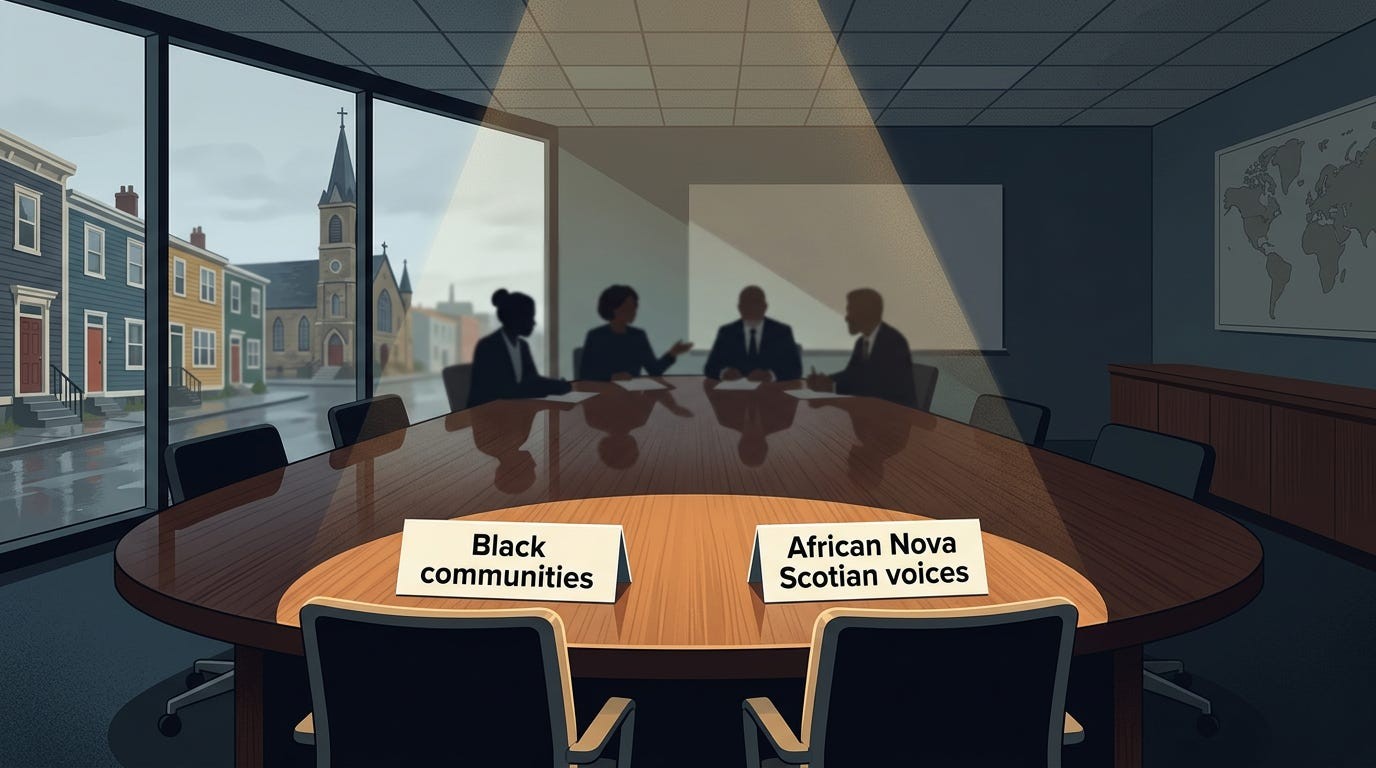
Some twenty-eight thousand Black families call Nova Scotia home. From the communities in the North End of Halifax to Preston and beyond, they have carried stories of slavery, segregation, displacement and quiet, stubborn survival. That history lives in our churches, our workplaces, and around kitchen tables where kids are taught to love this country. So when our black Sisters and Brothers heard the federal government was creating a new Advisory Council on Rights, Equality and Inclusion, many felt a spark of hope. A new national body to combat racism and hate, to help guide federal policy on rights and inclusion. Imagine that in 2026, after everything our Black communities had lived through, that should be seen as a real step forward.
Instead, it landed like a gut punch. That new council was launched as promised, but with no Black members at all. Not one. Anti-Black racism is not even named in the council’s goals, even though antisemitism and Islamophobia are. This is not a small oversight. In my view, it is a message to African Nova Scotians and Black Canadians: here we go again, and it is painfully familiar. Governments talk about inclusion while bulldozers leveled Black communities. They hold consultations while Black kids face streaming in schools, being pushed into lower-level courses, violence in policing, and barriers in hiring. They praise Black people’s “resilience” while refusing to share real power, and the list goes on and on.
Leaving Black communities out of a council on rights and equality fits a long pattern where Black people are studied, spoken about, mourned, but rarely invited in to decide. National leaders like Jean Augustine, Amnesty International Canada, unions, and Black community organizations have already called this out. They are clear: you cannot build a council on rights, equality and inclusion while excluding Black voices and refusing to name anti-Black racism. From here in Nova Scotia, with our centuries-long Black history, one can imagine the insult lands deep.
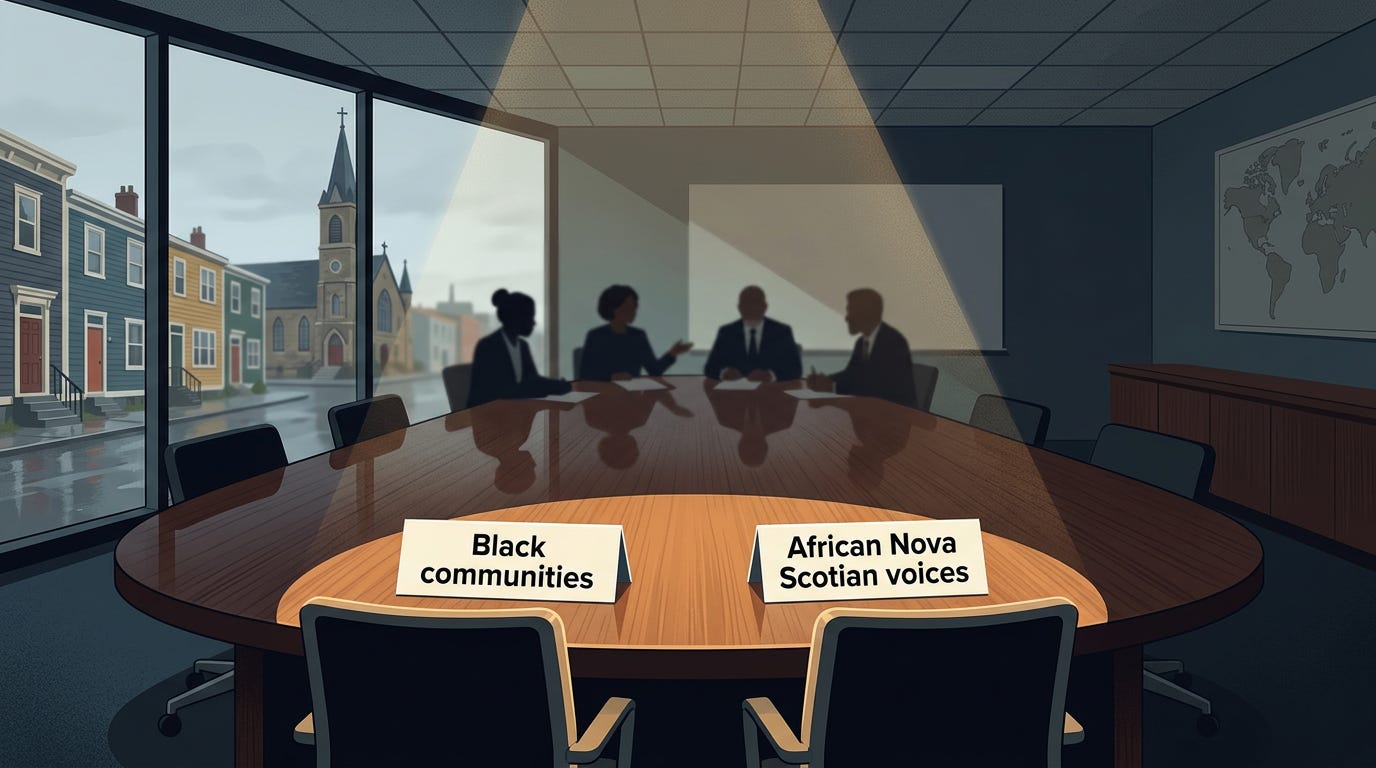
Some federal voices say the council is still “evolving,” as if Black representation is an add-on they remembered later, like an extra chair dragged in from the hallway to the table. But inclusion is not something you do after the fact. If you design the table without Black voices, you have already decided who counts. It tells our Black people, young and old, that they can be the subject of reports, but not the authors of solutions. It tells the elders who fought to desegregate schools and workplaces that the country still does not trust Black people to help steer the ship.
If Canada is serious about rights, equality and inclusion, it starts with filling those empty seats. Appoint Black leaders and community voices. Name anti-Black racism in the council’s goals. Share real power with the communities that have paid the most for the lack of it.
Anything less is more of the same.
Please take a second and share the post with your network and friends.