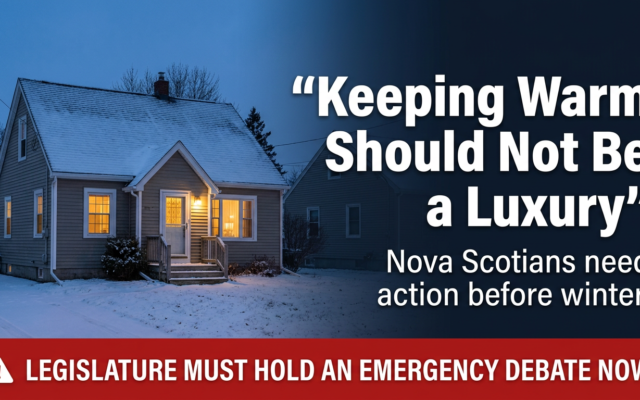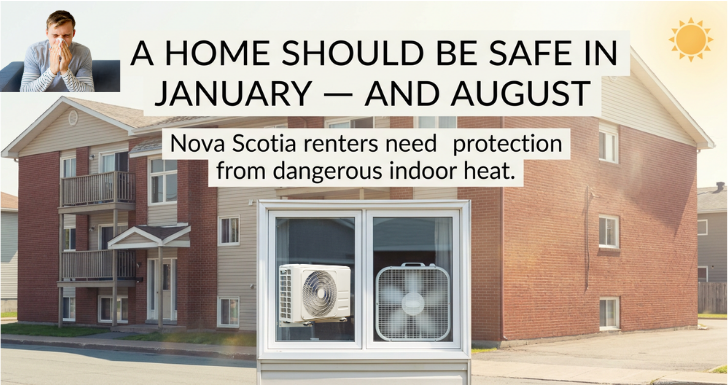
Nova Scotia has long understood that landlords cannot leave tenants freezing in winter. Rules about heat exist because we know cold homes can be dangerous. But what happens when a rental unit becomes an oven in August?
We have seen media stories about tenants in Halifax reporting indoor temperatures reaching 28 or 30 degrees Celsius. Some were running fans day and night. Some could not afford air conditioning. Others worried about whether a landlord would allow a window unit in the first place. I wonder whether we have lost all common sense. This is not simply an inconvenience for a few weeks or months. It is a real housing issue, a public health issue and a cost-of-living issue.
For a healthy person with money, a few hot days may mean discomfort, a higher power bill and a search for somewhere cool. For seniors, people with disabilities, people with chronic health conditions, families with young children and people living on low incomes, extreme indoor heat can become dangerous very quickly. Just look at the building that went without an elevator for a while. Imagine living in that situation.
Renters often have the least control because existing protections are not working well enough. They may live in older buildings with little insulation, windows that barely open, no shade and no air conditioning. They are often afraid to complain or be pushed out in a tight rental market.
Nova Scotia has standards requiring rental units to be safe and fit for living. A home that is dangerously hot for days on end is not truly safe or livable. Common sense tells us that we need a clear, enforceable maximum indoor temperature standard for rental housing. Just as landlords have responsibilities when temperatures drop in winter, they should have responsibilities when temperatures rise in summer.
The province should also make it clear that tenants have the right to use safe window or portable air conditioners. No one should have to choose between their health and a fight with their landlord. Low-income tenants and seniors also need help with the cost of buying and operating cooling equipment. Telling people to “stay cool” is not much help if they cannot afford the power bill.
Cooling centres are useful, but they are not a complete answer. People need a safe place to live, not just a public place to escape to for a few hours. This issue will not disappear when this heat wave does. More Nova Scotians are feeling the effects of hotter summers and colder winters, while rents, power and other living costs keep rising. That combination is especially hard on people already being squeezed from every direction.
Housing is more than a roof and four walls. It has to be safe in January and in August.
If Nova Scotia can require enough heat in winter, why can’t it protect tenants from dangerous heat in summer? We can do better.
This article was first published on Danny Cavanagh’s Substack on August 18, 2026. View the original Substack post. It has been lightly edited for spelling, grammar and Canadian usage.