Half a Loaf for Nova Scotia Workers
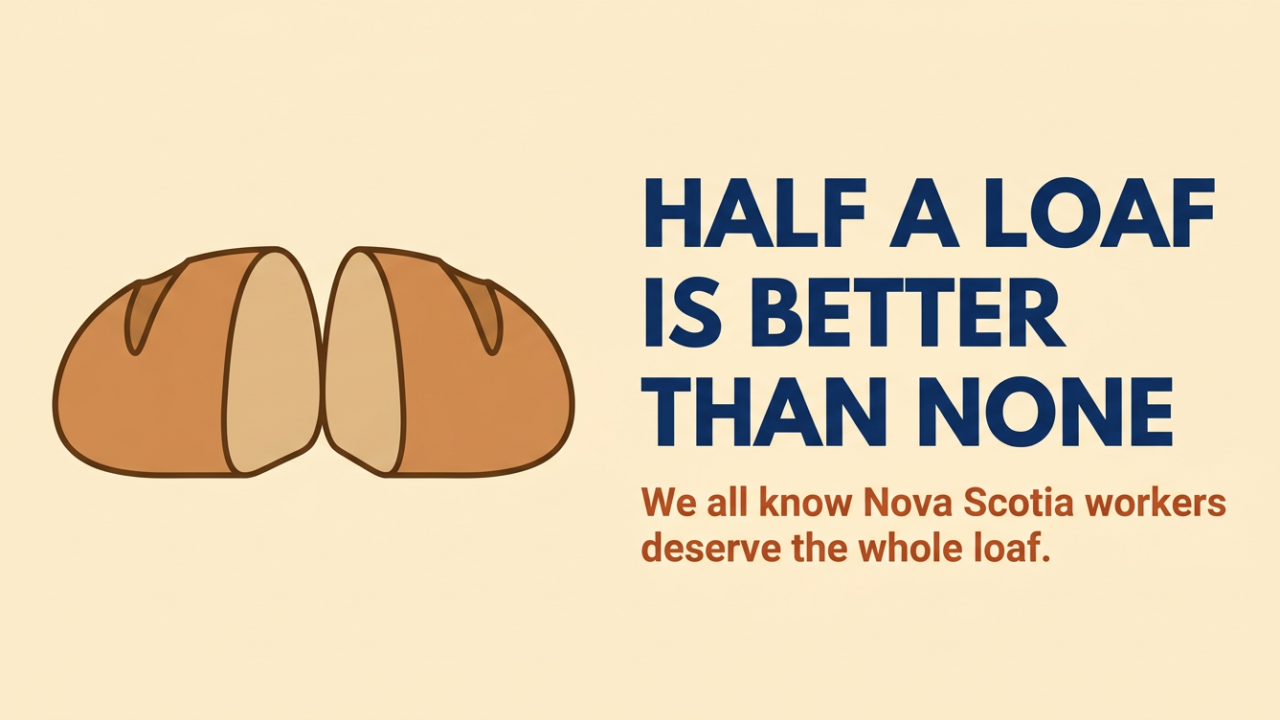
On September 8, the Houston government tabled Bill 256, a package of changes to the Nova Scotia Labour Standards Code. Labour Minister Nolan Young says it will put more money in workers’ pockets. He’s partly right. We all know this is half a loaf. Half a loaf beats no loaf at all. But let’s not let anyone dress it up as a feast.
Here’s the good half. Overtime pay will finally kick in after 44 hours a week instead of 48. The bill closes a loophole that lets bosses dodge overtime by calling the extra hours “voluntary.” Tips get legal protection for the first time, a change that matters to the 32,500 Nova Scotians working in restaurants and hospitality. Until now, we were one of the few provinces without a law stating that tips belong to the people who earn them. The real test comes in the writing: the regulations need teeth strong enough to stop tip theft and wage theft, and to hold bosses personally liable when workers get shorted.
Credit where it’s due. The Nova Scotia Federation of Labour and others call this real progress for some of the province’s lowest-paid, most precarious workers. Even the Restaurant Association is on side. When labour and the employers’ association agree, you know the change was long overdue.
Now the missing half. The overtime and tip changes don’t take effect until April 1, 2027. Workers wait seven more months. Why is that? The new 44-hour line still trails the 40-hour standard that covers federal workers and several provinces. And the wage recovery rules haven’t even been written yet.
And let’s be clear about what this bill doesn’t touch. Nova Scotia still doesn’t have a single paid sick day. Not one. The NDP has tabled paid sick day bills for years, and they gather dust on the shelf while people punch in sick because they can’t afford to stay home. It gets even worse. We need to write pay equity into its labour standards. Right now, the province’s pay equity law only covers the public sector. That leaves most working women in this province, those working in stores, restaurants, care homes, and private businesses, with no legal right to equal pay for work of equal value. A gap like this doesn’t close on its own. In fact, women still earned about 88 cents on the dollar in 2025. Without a law that applies to all employers, the gap persists, and women and their families keep paying the price.
So many of these exclusions create a two-tier problem, and it’s a big one. Whole groups of workers sit entirely outside the overtime rules and basic minimum standards, and this bill leaves them there. Farm workers, including the migrant workers who pick our apples and berries. Fishing boat crews. Logging and forestry workers. Live-in caregivers. Some domestic workers. Summer camp staff. Car and real estate salespeople, as well as many women, are left outside looking in.
Think about what that means. A grocery clerk hits hour 45 and starts earning overtime. A farmhand down the road works 60 hours during harvest week and gets no extra pay. Same province. Same sweat. Two different standards. One group gets the loaf. The other is told to be grateful for the smell coming from the bakery. Then we hear it’s hard to find people to do that work. I’m not surprised. You shouldn’t be either. These exemptions are leftovers from a time when farm work and domestic work weren’t treated as real work. Our minimum labour standards are badly out of date. Every province has its own list of exclusions, but that’s cold comfort to the worker left off it.
So yes, take the half loaf. Workers fought for these changes for years, and the Federation and others are right to celebrate. But much of the fight remains to fix the rest. We need a 40-hour overtime line. Paid sick days. Coverage for every worker, no matter the job. And WCB protection for all. Right now, about 26 percent of Nova Scotia workers, roughly 123,000 people, go to work every day with no workers’ compensation coverage. One injury, and they’re on their own.
Half a loaf feeds people today. It must never be an excuse to stop baking.
The Minister calls these minimum rules and says most employers already do better. If that’s true, Minister, what’s the harm in raising them?